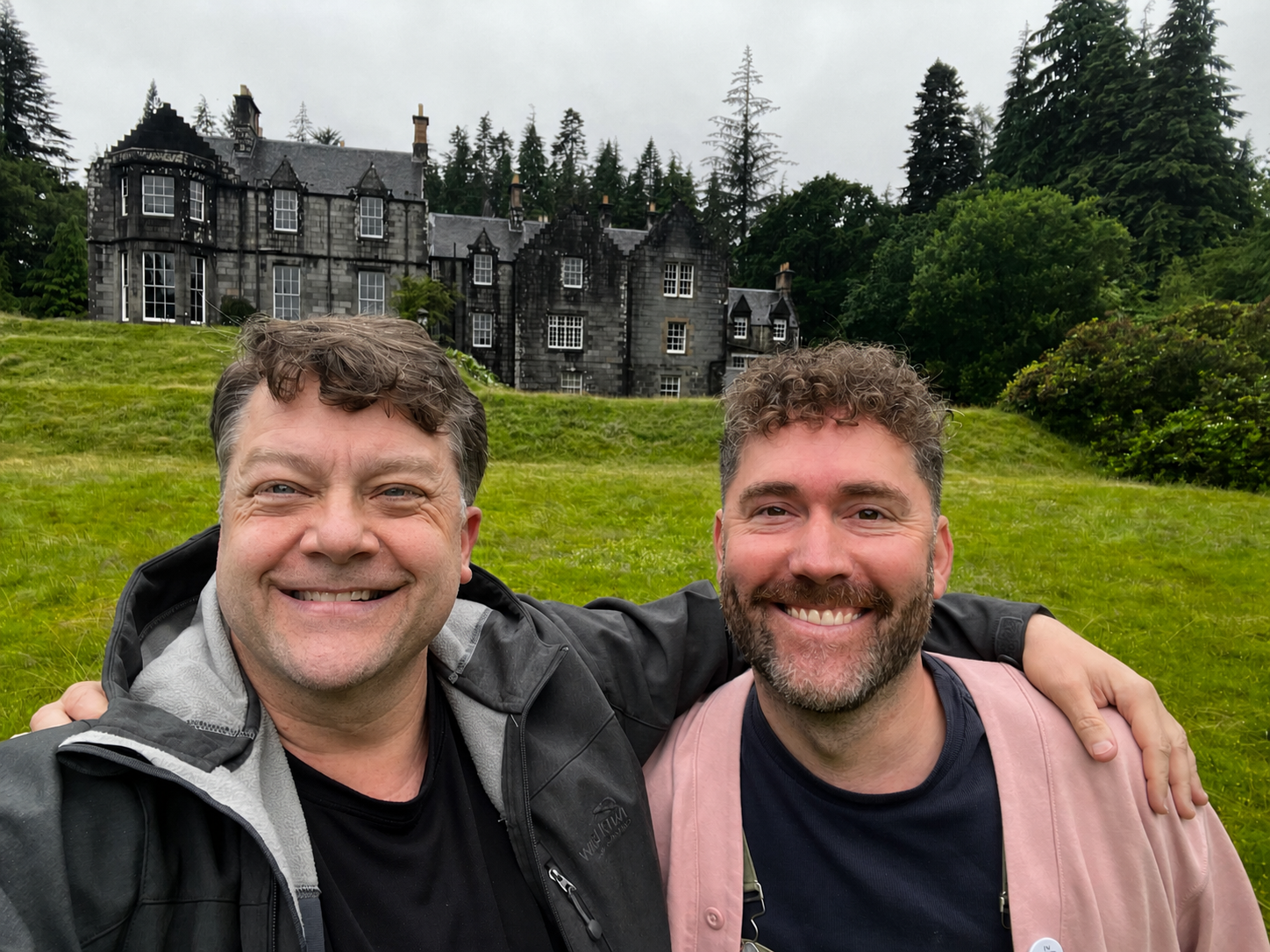
Kyle’s recent week-long visit to Edinburgh gave us the chance to move Project Argyll forward on several fronts at once. We combined time on the road with a concentrated series of professional meetings, turning questions developed over many months into more specific choices about land, structure, finance, and delivery.
Together, we visited five potential sites. Each offered a different version of what Project Argyll might become: established buildings or a largely open canvas, extensive woodland or more varied terrain, immediate access to water or a stronger starting point for shared infrastructure. Seeing the properties in person made the trade-offs much clearer than particulars and maps can. Access, slope, privacy, existing structures, neighbouring land, and the relationship between possible plots and shared space all became tangible.
The visits also reinforced the value of comparison. No estate should be judged only by its most dramatic view. A site must work as a complete system, including planning prospects, utilities, environmental responsibilities, purchase terms, construction logistics, and its relationship with nearby communities. Five very different properties gave us a sharper sense of which qualities are essential, which can be improved, and which risks should end consideration early.
Back in Edinburgh, we met Scottish accountants, solicitors, forestry brokers, our bank, and other prospective partners. Those conversations focused on the machinery behind the vision: how the company should operate, how land and member rights could be structured, how financial controls and reporting should develop, and how forestry, professional advice, and local relationships will fit into due diligence and future stewardship.
This work coincided with the formal launch of Project Argyll as a Scottish company limited by guarantee. Registration is an important milestone, but it is a foundation rather than a conclusion. The company now provides an accountable organisational home from which to develop the model, engage advisers and partners, maintain proper records, and prepare for the decisions that will accompany a land purchase.
The week did not produce a final site, nor was that its purpose. It produced something more useful at this stage: better evidence, clearer questions, stronger professional relationships, and a working organisation through which the next phase can proceed. Project Argyll remains a long-term undertaking, but it is now moving forward with firmer ground beneath it.