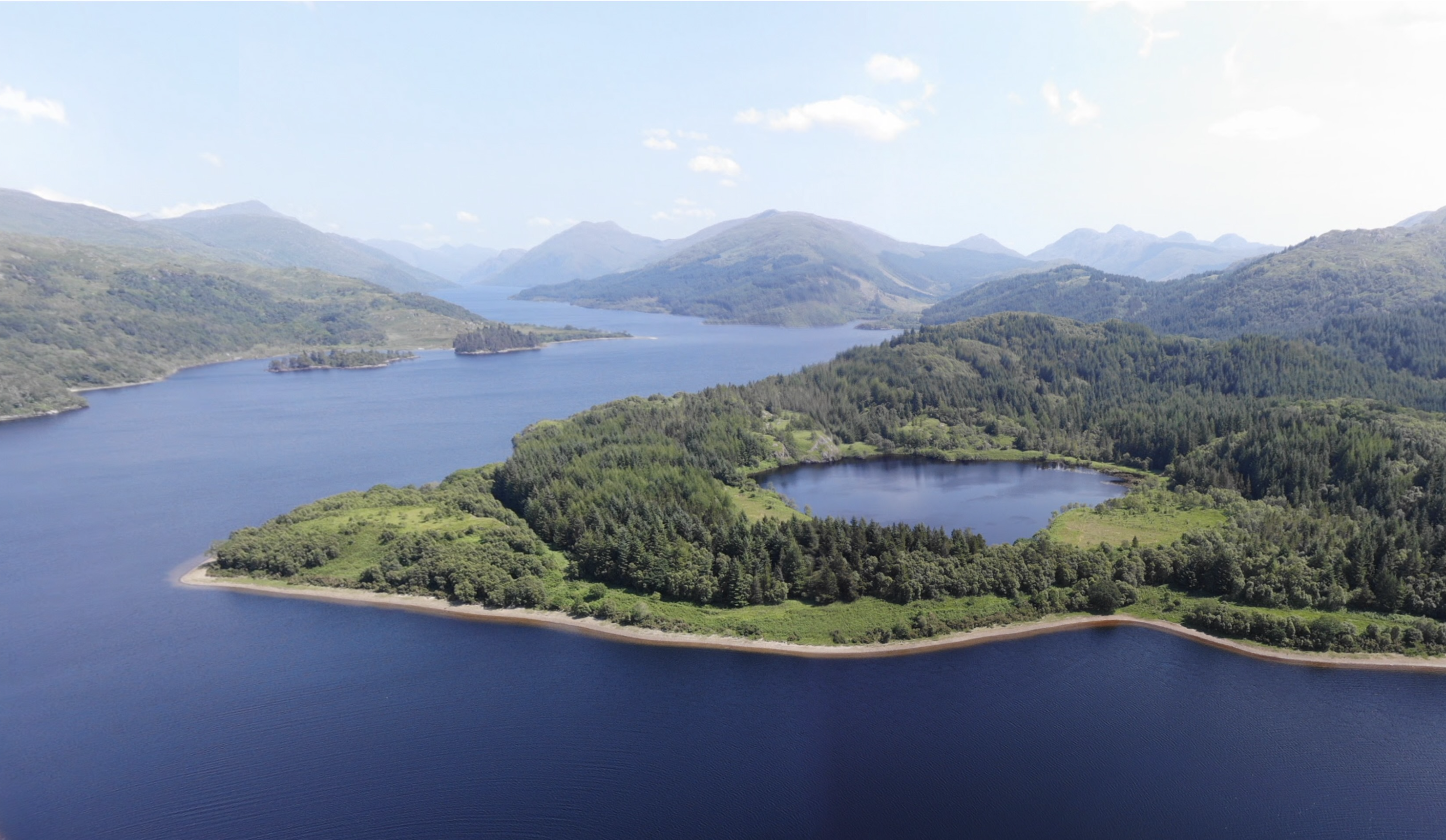
Finan’s Point is Site 3 in our working assessment: a visited, 163-acre peninsula on Loch Shiel, near Acharacle and within the wider Lochaber region. What is sometimes described as a Scottish ‘Site of Outstanding Natural Beauty’ is formally the Loch Shiel National Scenic Area, a national designation for landscape of outstanding scenic value. NatureScot identifies its defining qualities as the long loch, remote mountains, rich woodland, varied shoreline, and exceptional wildlife.
The site brings several of Project Argyll’s priorities together unusually well. It has extensive forest cover, long stretches of direct loch frontage, three or more potential sandy beaches, and a private lochan within the peninsula. The assessment records water access suitable for swimming from across the site, deep-loch fishing, commercially useful woodland, relatively gentle ground across about half the land, an existing small dwelling, nearby grid electricity, and some established forestry tracks. Few candidates combine water, woodland, privacy, and potential plots so completely.
Loch Shiel strengthens that appeal. The 28-kilometre freshwater loch runs between Acharacle and Glenfinnan through steep mountains and wooded shores. It supports boating, canoe journeys, wild swimming, and regulated fishing for brown trout, sea trout, and salmon. Fort William is the nearest major town in our assessment, placing the peninsula within reach of Lochaber’s services, mountain culture, and outdoor economy while retaining a markedly remote character.
The wildlife is not incidental. Loch Shiel is a Special Protection Area of national importance for breeding black-throated divers. VisitScotland also identifies golden eagles, white-tailed sea eagles, red-throated divers, hen harriers, and red deer among the species that may be seen around the loch. Any development would therefore need to treat habitat surveys, shoreline protection, forestry practice, lighting, noise, and construction timing as core design inputs rather than later conditions.
The decisive challenge is access. Remoteness creates much of Finan’s Point’s beauty, but the same quality produces a substantial engineering and financial burden. Our current estimate is that reaching the peninsula would require approximately four to six kilometres of new road before creating or adapting the internal access network. Ground conditions, gradients, drainage, bridges or culverts, ecological constraints, emergency access, construction traffic, and lifelong maintenance could materially affect feasibility and cost.
Finan’s Point therefore illustrates the discipline behind the search. Its working assessment is highly suitable, and its rare combination of loch frontage, forest, beaches, and an inland lochan makes it a serious candidate. Yet the access route could outweigh those advantages if it proves environmentally unacceptable or disproportionately expensive. The next responsible step would be a professional access-feasibility study alongside title, planning, forestry, ecological, utility, and ground investigations. The objective is not to make a wild place less remote, but to establish whether a community could reach and care for it without compromising what makes it exceptional.