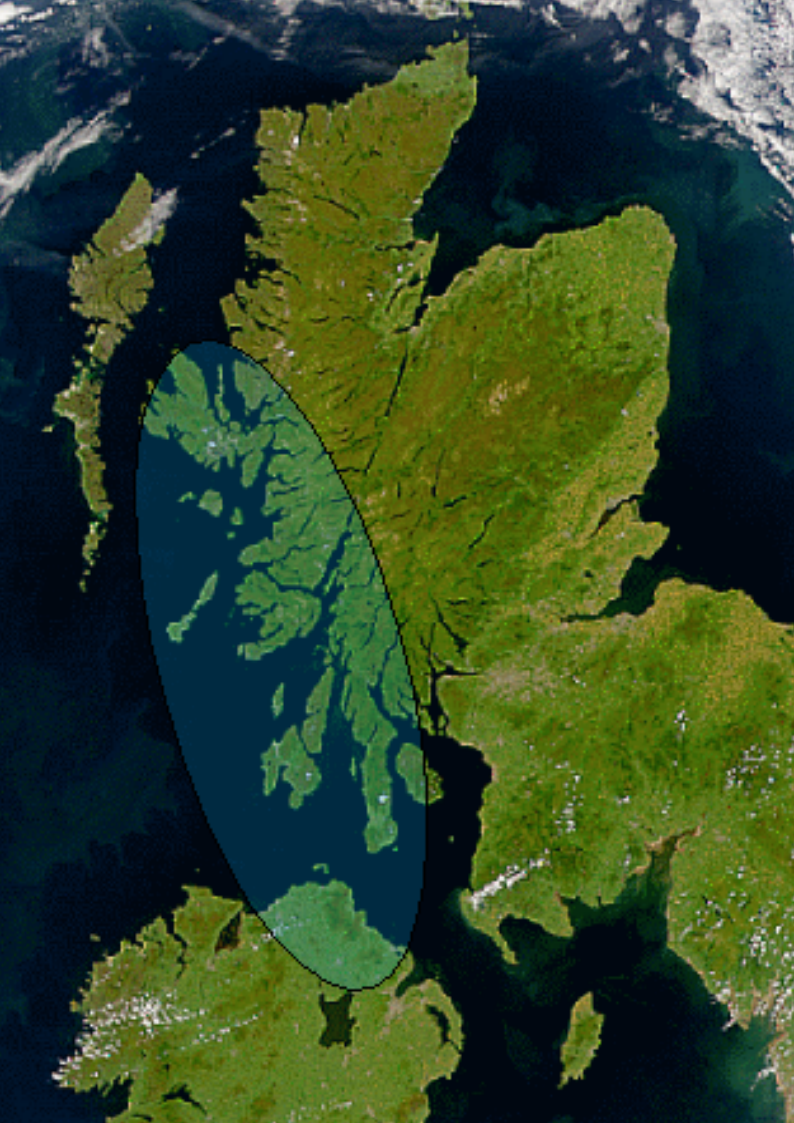
Argyll has long been a place shaped by connection across water. Dál Riata was an early medieval Gaelic kingdom whose territories included much of the western seaboard of modern Scotland and north-eastern Ireland. At its height in the sixth and seventh centuries, it linked Argyll, Kintyre, the Inner Hebrides, and Antrim through kinship, faith, trade, and travel. The modern map below shows an approximate extent, not a fixed modern-style border. As the Scottish History Society notes in its brief account of Dalriada, the surviving historical record is thin and fragmentary, and its interpretation continues to develop.
For Dál Riata, the sea was a route rather than a boundary. Sea lochs, islands, and short crossings allowed people, goods, ideas, and religious life to move between communities that appear distant on a road map. Iona became an important centre of learning and influence, while Argyll’s coast connected local settlements with Ireland, the Hebrides, and wider European networks. That maritime outlook is part of why the history remains so relevant to a project considering how a Highland estate might be both private in daily life and connected in purpose.
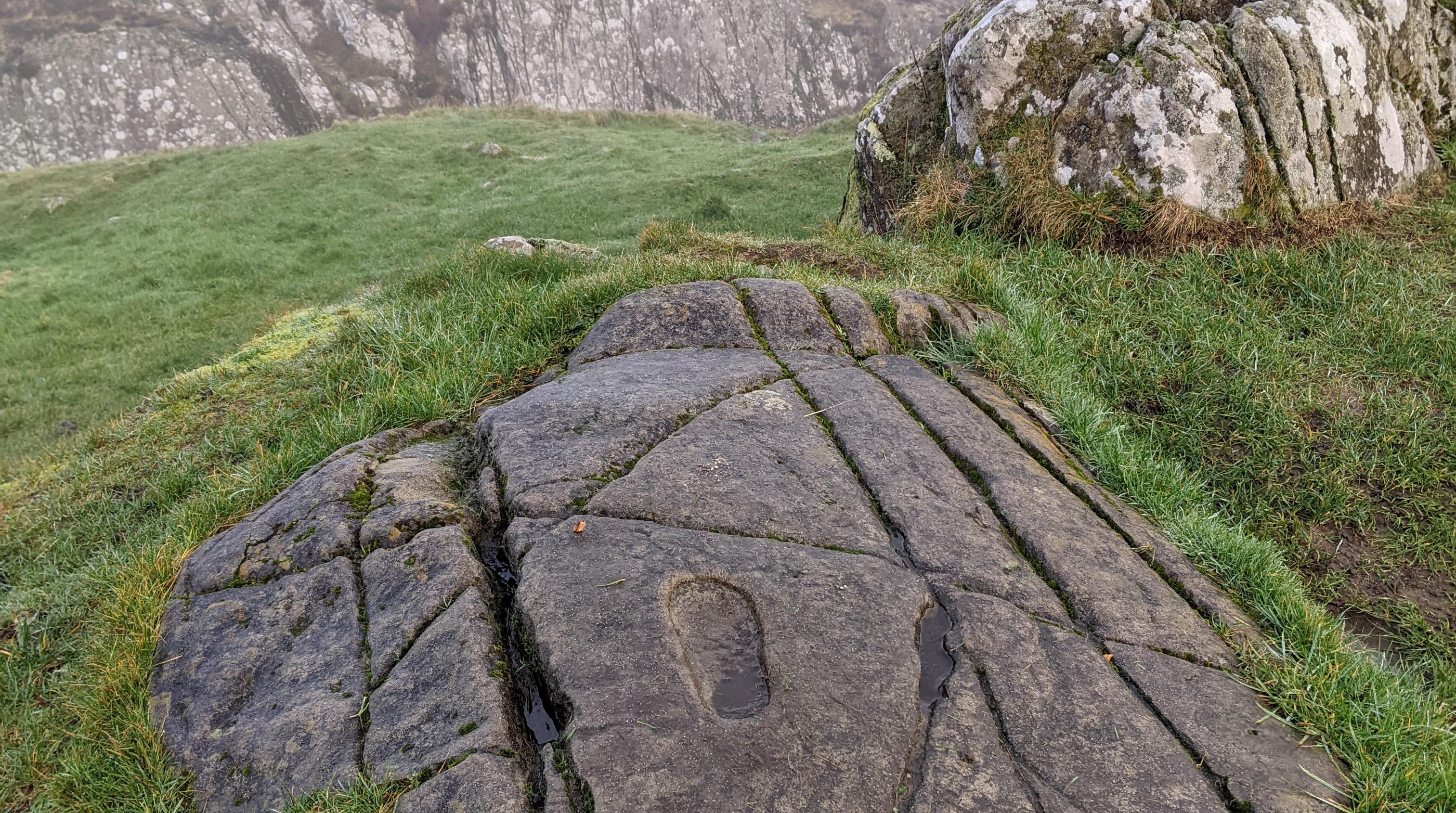
Dunadd, in Kilmartin Glen, is associated with the kingdom’s royal power. The carved footprint shown above is one of several remarkable rock markings at the site. Historic Environment Scotland says that the footprints may have been used in inauguration ceremonies, symbolising a new ruler’s dominion over the land. The precise ritual meaning cannot be recovered with certainty, but the image offers a powerful reminder that leadership was expressed through a physical relationship with a particular place, not only through title or possession.
Project Argyll is not an ancient kingdom, and history should not be used as a ready-made template for a modern community. The parallel is more modest. A durable community has to recognise that land is not an abstract asset. It is water, soil, woodland, habitat, access, weather, neighbouring communities, and the limits imposed by each. Environmental sustainability is therefore not a decorative addition to the Project. It is a practical obligation that should shape where and how we build, manage energy, protect nature, and maintain what is held in common.
That is why the Project’s proposed Values and Standards Framework, renewable-energy matrix, and member governance matter together. A Virtual Power Plant can coordinate generation, storage, heating, and electric transport across the estate. Thoughtful landscape, water, and biodiversity work can reduce impact while improving resilience. Clear collective decisions can ensure that shared infrastructure remains useful over time. Dál Riata’s history does not prescribe these choices, but it does invite a longer view: communities endure when their ambitions remain accountable to the ground beneath them and to the people connected across it.